👦
Who Are We at the Park?
Students identify pronouns and practice the basic structure of am / is / are through visual cards and guided examples.
- Pronouns with pictures
- Simple sentence models
- Drag-and-match practice
A colorful, inclusive and child-friendly academic unit designed to teach the verb to be, feelings and places through interactive activities inspired by Mundo Aventura.
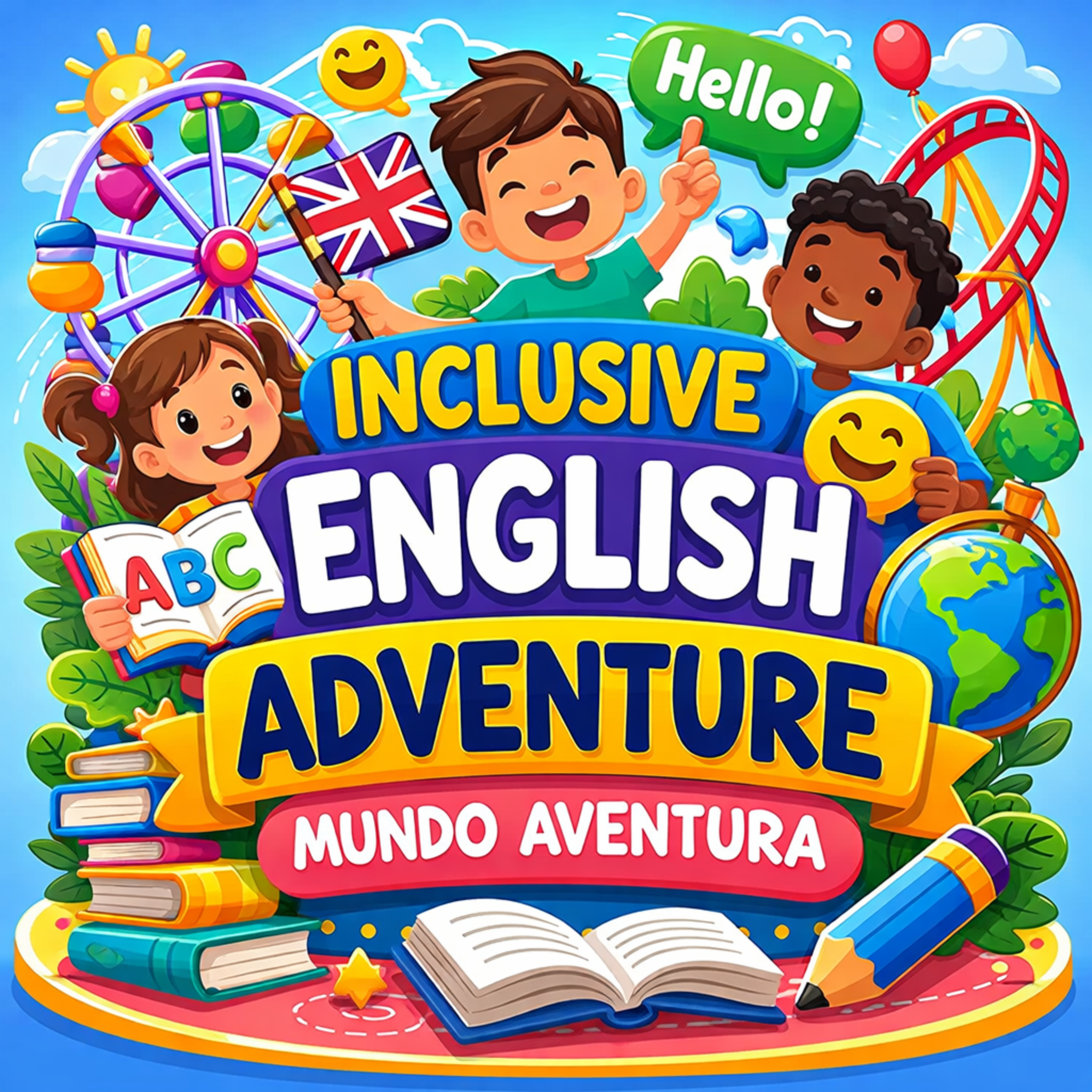
This unit uses a familiar local context to create a meaningful virtual English learning experience for fourth-grade students in Bogotá.
This academic unit helps children learn English through a joyful and accessible digital environment. Instead of presenting isolated grammar, the content connects language with a recognizable amusement park setting that feels close, friendly and motivating.
The main objective is for students to describe people, emotions and places in an amusement park using the verb to be in affirmative and negative forms. The design encourages participation, confidence and inclusion through simple language, visual support and short interactive tasks.
Students will use am, is, are to describe people, feelings and places in a virtual amusement park environment.
The unit is organized in short, child-friendly modules. Each one builds confidence without turning the page into a maze of doom.
Students identify pronouns and practice the basic structure of am / is / are through visual cards and guided examples.
Students describe attractions and places using adjectives and short structures based on images from the amusement park context.
Students express emotions and preferences using simple English, visual prompts and short personal responses.
Inclusion here is not decorative glitter. It is built into the way content is presented, navigated and practiced.
Images, icons and color-coded sections help learners understand ideas quickly.
Instructions are short, direct and appropriate for A1 learners.
Students can read, listen, observe, match, complete and respond.
The layout adapts to phones, tablets and computers with large touch-friendly elements.
These blocks are ideal for H5P, Gutenberg groups or reusable WordPress sections.
Students relate images from the park to words such as roller coaster, carousel and food court.
Students hear a short sentence and select the correct character, feeling or place.
Students use am, is, are to complete simple statements with image support.
Students describe one ride and explain how they feel using a short personal response.
Use it for drag and drop, fill in the blanks, memory games and interactive quizzes.
Use containers, cards, icon lists and responsive sections to keep the page playful and structured.
Use accessibility improvements to support navigation, contrast and readability.
Assessment is brief, supportive and focused on observable participation and language use.
| Criteria | Great | Good | Basic |
|---|---|---|---|
| Verb To Be | Uses am, is, are correctly in simple sentences. | Makes minor mistakes but communicates the idea. | Needs more support to use the structure correctly. |
| Vocabulary | Uses vocabulary about places and feelings confidently. | Uses some key words with occasional hesitation. | Uses limited vocabulary and needs guidance. |
| Participation | Participates actively in digital activities. | Participates with some teacher support. | Shows limited participation in the tasks. |
This unit combines local context, inclusive pedagogy and child-friendly digital design to create an engaging English learning experience. By connecting grammar with familiar places, emotions and playful activities, students can learn with confidence and curiosity.
Back to the topYou can replace or expand these references according to the exact sources you used in your final assignment.